
Meal Box Options for High-Volume Food Delivery
Published
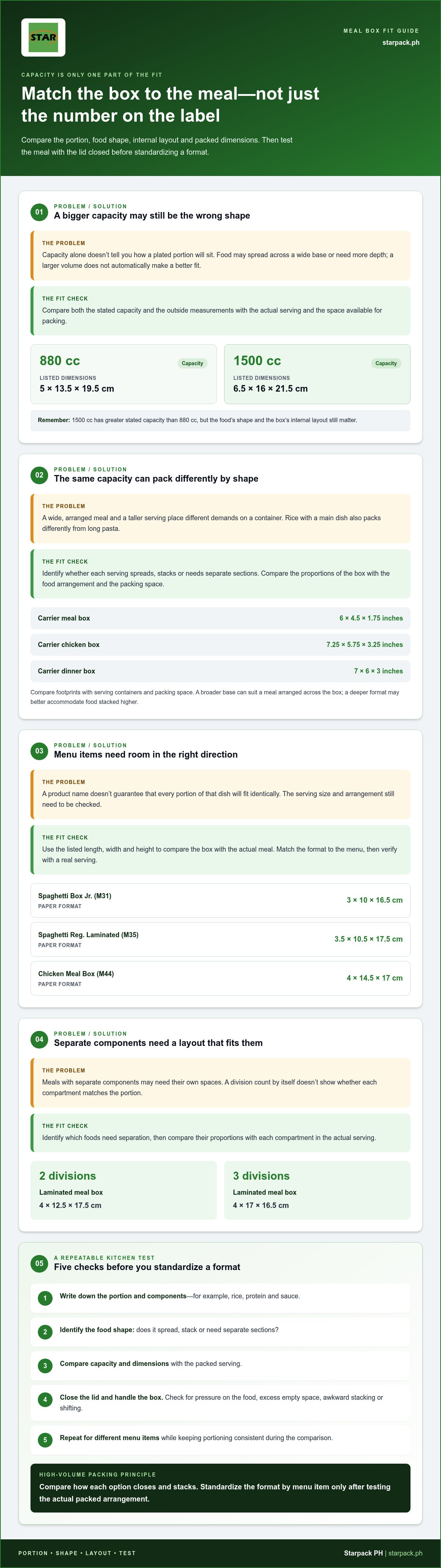
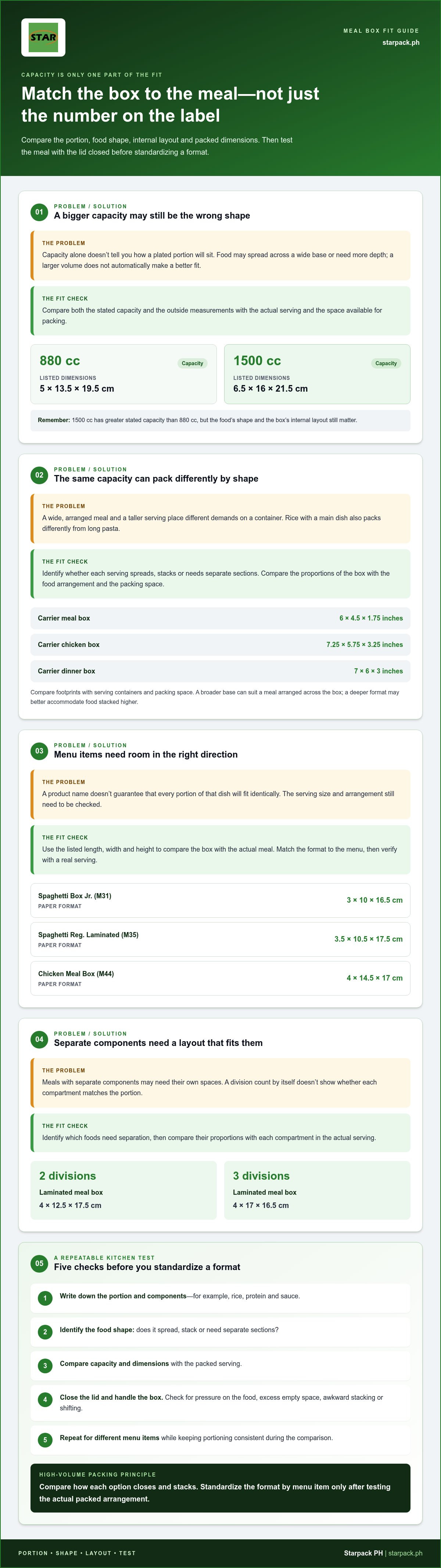
A larger meal box isn’t automatically the better fit for delivery. Match capacity and internal layout to the portion: an 880 cc box measures 5 x 13.5 x 19.5 cm, while a 1500 cc box measures 6.5 x 16 x 21.5 cm. Carrier-style options also vary in footprint, from 6 x 4.5 x 1.75 inches to 7.25 x 5.75 x 3.25 inches.
For a busy kitchen, choosing the right meal box helps keep portions consistent, pack orders efficiently, and reduce the risk of food shifting in transit. Compare box styles, match capacity to your menu and serving size, and decide whether compartments suit the meals you serve. When buying packaging for regular, high-volume delivery, also consider how each format fits your packing workflow and storage space.
Key Takeaways
- Choose a container around the actual portion and menu layout, not capacity alone; compartments can help keep components separate during packing.
- For regular food-service orders, compare wholesale suppliers by the packaging formats they carry and how well those options fit your packing workflow.
- Packaging costs depend on factors such as material, size, and order quantity, so compare options against both portion needs and purchasing volume.
- Plan storage and reheating separately: keep packaging organized for kitchen use, and use only containers suited to the food and reheating method.
- Match each menu item to a practical format, such as a spaghetti box for pasta or a bowl for salad, to keep packing decisions consistent.
Table of Contents
Meal box capacities
Capacity helps narrow choices, but volume alone won’t settle the fit. An 880 cc container measures 5 x 13.5 x 19.5 cm. A 1500 cc option measures 6.5 x 16 x 21.5 cm. Those dimensions affect the footprint, stack height, and room available for a plated portion. Compare the listed capacity and measurements before choosing a format.
Consider the food’s shape as well as its amount. A compact portion may spread across a wide base, while a taller serving may need more depth. Rice with a main dish, for example, packs differently from long pasta. Check how each menu item sits in the container instead of relying on volume alone.
Carrier-style formats also vary in their proportions. A carrier meal box measures 6 x 4.5 x 1.75 inches. A carrier chicken box measures 7.25 x 5.75 x 3.25 inches. A carrier dinner box measures 7 x 6 x 3 inches. Compare these footprints with your serving containers and packing space. A broader base can suit a meal arranged across the box. A deeper format may better accommodate food stacked higher.
Paper formats offer another way to match shape to menu. The Spaghetti Box Jr. (M31) measures 3 x 10 x 16.5 cm. The Spaghetti Reg. Laminated (M35) measures 3.5 x 10.5 x 17.5 cm. The Chicken Meal Box (M44) measures 4 x 14.5 x 17 cm. These measurements show how a box’s length, width, and height can suit different food arrangements. They don’t mean every serving of that dish will fit identically.
Divisions matter when a meal includes separate components. A two-division laminated meal box measures 4 x 12.5 x 17.5 cm. A three-division laminated meal box measures 4 x 17 x 16.5 cm. The compartments give food components their own spaces. Review the layout against the actual serving: identify which foods need separation, then compare their proportions with each compartment.
Use this selection process for each menu item:
- Write down the portion and its main components, such as rice, protein, and sauce.
- Identify whether the food spreads, stacks, or needs separate sections.
- Compare the listed capacity and dimensions with the packed serving.
- Test the arrangement with the lid closed, then check for shifting during handling.
- Repeat the test for menu items with different shapes or components.
For high-volume packing, consistency is the key operational test. Use the same portioning method during trials, then compare how each option closes and stacks. A 1500 cc container has greater stated capacity than an 880 cc container, but the larger volume alone doesn’t establish the best fit. The food’s shape and the box’s internal layout still matter.
Choose by menu, not by capacity label alone. An 880 cc, 1500 cc, carrier, paper, or divided format can serve different packing needs. Match the dimensions to the portion, test the packed arrangement, and standardize the format for each menu item.
Selecting the right meal box requires careful attention to detail for every menu. The 880 cc meal box has dimensions of 5 x 13.5 x 19.5 cm, while the 1500 cc meal box has dimensions of 6.5 x 16 x 21.5 cm. Consider both the amount of food and the room each format takes up when packed. Greater capacity may provide more space, but the box’s proportions still need to suit the food and the way it will be arranged.
To test a meal box, load it with the intended serving and close it as you would during service. Look for pressure on the food, excess empty space, or a shape that is awkward to arrange alongside other packed meals. Keep the portion consistent as you compare options, so you’re assessing the container rather than a change in serving size. Choose based on how the meal fits, closes, and handles, not just the capacity label.
Where can I buy meal boxes in the Philippines?
Food businesses in the Philippines can source meal boxes from food-packaging wholesalers, restaurant-supply shops, local packaging retailers, and online business marketplaces. Choose a channel based on order volume, storage space, and how often your menu uses each format. A small café may prioritize manageable stock, while a central kitchen may need repeatable bulk purchasing. Start by listing your regular order volume and the packaging formats your menu requires.
Wholesale suppliers are useful when packaging is part of routine kitchen purchasing. They can provide several food-service categories through one supply channel, including containers, bowls, cups, and utensils. This can simplify ordering for operations that pack rice meals, salads, and drinks. Before choosing a format, compare its dimensions and compartment layout with your menu, using the same criteria for every supplier.
Restaurant-supply shops and local packaging retailers suit operators who want to view packaging before buying. Bring a sample portion or a written description of the meal. Compare the container’s shape, closure, and stackability with your kitchen workflow. For example, check whether the lid closes over a serving with separate rice and protein. Practical fit matters more than the product label alone.
Online business marketplaces make it easier to compare product descriptions across sellers. Search by container type, capacity, and intended food use. Read the packaging details carefully and compare the stated measurements and pack quantities. Record the exact format you need to make repeat purchases easier and avoid mix-ups between similar-looking containers.
Use these steps to narrow your buying channel:
- Group menu items by packaging format, such as rice meals, pasta, and salads.
- Estimate demand from your kitchen’s usual order pattern and storage capacity.
- Compare supplier listings for dimensions, divisions, material, and pack quantity.
- Test a sample with a real portion before standardizing the format.
- Record the selected format and reorder details for the purchasing team.
For high-volume operations, consistency matters with every replenishment. Keep a simple purchasing record that lists the container description, dimensions, pack quantity, and supplier channel. If your kitchen uses different boxes for pasta and rice meals, record them as separate items. This helps staff order the right format and prevents substitutions from disrupting the packing line.
Plan storage before placing a bulk order. Measure the shelf or stockroom space, then consider how cartons will be stacked and accessed. Keep frequently used formats near the packing station. Even packaging that suits the menu can cause problems if a large order blocks prep space. Match purchase quantities to actual storage capacity and usage.
For food-service packaging options, browse wholesale food packaging supply as one channel to consider. Compare each format with your menu and packing routine before making it a regular purchase.
How much do meal boxes cost in the Philippines?
Meal box cost depends on the selected format, material, size, and purchase quantity. A single-compartment container and a divided container meet different packing needs, so their prices aren’t directly interchangeable. Compare the exact item and unit basis before budgeting for regular orders.
Capacity is one cost factor, but it doesn’t tell the whole story. An 880 cc box and a 1500 cc box differ in size, so they use different amounts of packaging material. A divided design adds internal sections, which can also affect the item’s cost. Match the container to the portion before comparing supplier quotations.
Material and construction also affect the comparison. Paper boxes, laminated boxes, and plastic containers are distinct products, while lids and compartments may change the specification. Compare like with like by checking capacity, dimensions, divisions, and material. Otherwise, a lower unit price may reflect a different container rather than better value.
Order quantity affects your total purchasing outlay. A larger order means buying more units at once, so weigh the total amount due against the per-piece cost. Also consider how much stock your kitchen can store and use. Ordering beyond practical capacity can tie up your budget and crowd the packing area.
Build a clear comparison using these steps:
- List each menu item and its required container format.
- Record capacity, dimensions, material, and compartment layout.
- Compare quotations for the same item and unit basis.
- Calculate the order total using the quoted unit price and quantity.
- Review the expected usage and storage space before setting order quantity.
For example, compare two offers for the same 880 cc container. Check whether both include the same material, dimensions, and pack quantity. Then compare the total purchase amount and the per-piece cost. If one offer describes a different lid or layout, treat it as a separate product. This keeps the purchasing decision grounded in the actual packaging requirement.
For high-volume delivery, track packaging use by menu item. A pasta container may be used at a different rate from a divided rice-meal box. Record what the kitchen uses during each ordering cycle, then use that pattern to plan replenishment. This helps prevent excess stock of slow-moving formats and urgent purchases of frequently used ones.
Don’t compare packaging cost in isolation. A container that fits the portion can support consistent packing and avoid transferring food between formats. A box that’s too small may not suit the serving, while an oversized option uses more material than needed. Assess fit, packing routine, and purchase quantity together.
In the Philippines, request or review itemized quotations in Philippine pesos. Confirm that each line identifies the exact format, unit, and quantity, then keep the quotation with your purchasing record. If specifications change, compare the revised item against the same menu and packing needs before updating your budget.
How should meal boxes be stored and reheated safely?
Keep unused packaging separate from prepared food throughout the kitchen workflow. Store empty boxes in a clean, dry area away from splashes, dust, and cleaning products. Leave cartons closed until staff need them. For example, move a carton to the packing station when the team is ready to use its contents.
Organize stock by format and use older suitable stock first. Label shelves so staff can distinguish paper containers from plastic ones, and keep lids with their matching containers where possible. A clear layout helps workers find the right format without searching through mixed cartons during a busy packing run.
Inspect each container and lid before filling. Set aside anything dirty, damaged, or misshapen, and check that the lid closes securely over the food. Choose a meal box suited to the menu item and pack it so the closure sits properly. Don’t use damaged packaging for an order.
Reheating depends on the material and the packaging’s stated instructions. Don’t assume a takeout container is suitable for a microwave, oven, or other appliance. Read the package guidance and follow the specified method. If the instructions don’t cover the appliance you intend to use, transfer the food to cookware designed for that use.
Use this sequence for packed meals:
- Store unused containers in a clean, dry stock area.
- Inspect the container and lid before filling.
- Pack the food in the appropriate format and close it securely.
- Follow the packaging’s reheating instructions when provided.
- Transfer food to suitable cookware if instructions don’t cover the appliance.
For a sauced rice meal, check the closure before dispatch. Keep a salad container away from heat until service. These examples show why staff should follow material instructions rather than judge suitability by appearance. A laminated surface or sturdy construction alone doesn’t establish that a container is suitable for an appliance.
Make reheating guidance easy for staff to find by keeping the packaging or its instructions available at the packing station. If a customer asks how to reheat an order, share only the method stated for that container. Don’t infer suitability from a similar-looking product, since containers with similar shapes may use different materials.
Keep stock rotation simple: place new cartons behind older cartons of the same format, and leave labels visible. Move wet or dirty packaging away from usable stock. This helps staff select clean containers without mixing formats and maintain a consistent routine when orders shift between menu items.
Assign each menu item a packaging format and reheating note. A packing guide, for example, can identify the container, the closure check, and any stated reheating method. Update the guide when the menu or packaging changes. A meal box handling routine is easiest to follow when its instructions match the container in use.
For a consistent packing setup, explore food packaging options.
Starpack PH: Spaghetti Box 500ml
Starpack PH supplies food packaging for businesses standardizing delivery orders. For pasta portions, the Spaghetti Box 500ml provides a dedicated format to consider alongside your menu and packing workflow. Match it to the serving, then use the same format for consistent packing.
Build out other order formats with a Paper Cup 8oz for drinks, a Kraft Salad Bowl 500ml for salads, or a Clamshell 700 Brown Silver for suitable meals. Selecting packaging by menu item helps staff organize the packing station and choose the right container during busy service.
For food-service packaging options, visit Starpack PH online.
Set Up Your Next Packaging Order
Make your next purchasing decision easier to repeat with a short packaging spec sheet for your team. Match each menu item to a container and portion, then add packing notes so staff can follow the same process as menus and order patterns change.
For pasta, Starpack PH offers the Spaghetti Box 500ml. Its offerings also include the Paper Cup 8oz and Kraft Salad Bowl 500ml. Use a meal box for menu items it suits, and keep each format clearly identified in your purchasing notes.
For your operation’s meal box needs, contact Starpack PH about packaging. A clear specification gives your team a practical starting point for the next order.
Frequently Asked Questions
What does this packaging term mean in the Philippines?
In the Philippines, a meal box is a disposable container for packing prepared food for takeaway or delivery. The term covers different formats, not one fixed shape or portion size. A food business, for example, may choose a divided box to keep rice and other components apart. The right format depends on the menu item and how the kitchen packs it.
Frequently asked questions
What does this packaging term mean in the Philippines?
In the Philippines, a meal box is a disposable container for packing prepared food for takeaway or delivery. The term covers different formats, not one fixed shape or portion size. A food business, for example, may choose a divided box to keep rice and other components apart. The right format depends on the menu item and how the kitchen packs it.